

 Bearings
 Housings/housing Units
 Linear Technology
 V-Belts
 Seals
Seals
SKF
| Scale quantity | Your discount | Unit price |
|---|---|---|
| 10 | 7,94 € | 150,82 € |
| 20 | 15,88 € | 142,88 € |
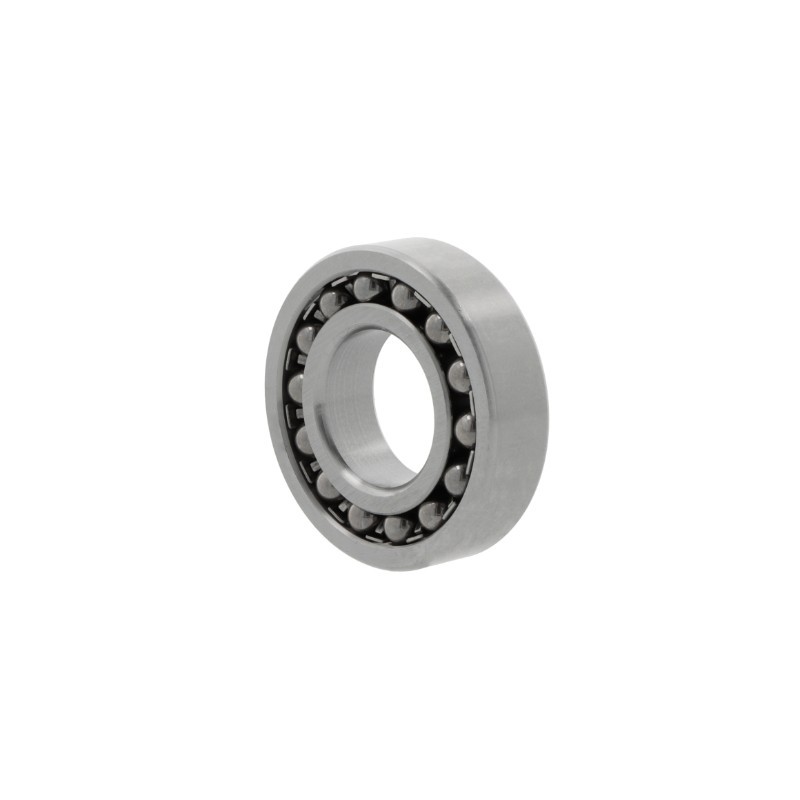
The SKF 1314 self-aligning ball bearing (70x150x35 mm) is a double-row, open rolling bearing designed for bearing arrangements where misalignment or shaft deflection may occur.
The SKF 1314 self-aligning ball bearing is designed for applications where shaft deflection or misalignment between the housing and the shaft needs to be compensated for. As a double-row rolling bearing, it features a common spherical raceway in the outer ring. This design enables the two rows of balls to dynamically compensate for angular misalignment during operation without causing impermissibly high edge pressures on the raceways. The component is made of roller bearing steel (100Cr6) and features a cylindrical bore for direct shaft mounting.
Design engineers primarily use this self-aligning ball bearing on long shafts and in flexible housing structures. Typical applications include industrial drives and general mechanical mountings where misalignment may occur. Thanks to its angular adjustment capability, the bearing automatically compensates for misalignment, which reduces additional friction and premature wear on the raceways. The open design, without abiding seals, also allows for flexible integration into housing-side lubrication systems for the respective application.
The integrated sheet steel cage reliably guides the rolling elements of both rows of balls and keeps the weight of the rotating bearing components to a minimum. Together with the standard radial bearing clearance, this design is intended for standard fit conditions and operating temperatures between –30 and +150 degrees. Manufacture to tolerance class P0 or ABEC 1 complies with standard specifications for mechanical engineering. As no seals are fitted as standard, the bearing housing must be protected against the ingress of dirt and moisture by the surrounding housing structure.
This roller bearing has a bore of 70 mm, an outer diameter of 150 mm and a width of 35 mm. These dimensions comply with the standardised specifications for this size and allow it to be fitted into suitable bearing housings.
The balls in both rows run on a continuous, spherical raceway in the outer ring. This allows the inner ring, together with the ball cage, to tilt during operation. Any misalignment of the shaft or static misalignment of the housing is thus compensated for directly within the bearing.
As an open bearing, the product does not come with any integrated seals or grease fillings ex works. You should lubricate the bearing via the surrounding housing using a suitable lubricating oil or rolling-element bearing grease. An external housing seal is required to keep out dirt and prevent lubricant loss.
The permissible operating range is between -30 and +150 degrees Celsius. The standard roller bearing steel (100Cr6) used, as well as the heat-resistant sheet steel cage, retain their dimensional stability and mechanical strength within this range. The lubricant actually used must also be suitable for the operating temperature encountered.
P0, also known as standard tolerance (PN) or ABEC 1, defines the accuracy of the bore, outer diameter and concentricity. This tolerance class meets the standard quality requirements in general mechanical engineering and ensures a precise fit on standard shafts and in standard housing bores.
SKF Group
Sven Wingquists Gata 2, 415 50 Gothenburg, Sweden
info@skf.com, https://www.skf.com/uk/footer/site-ownership